
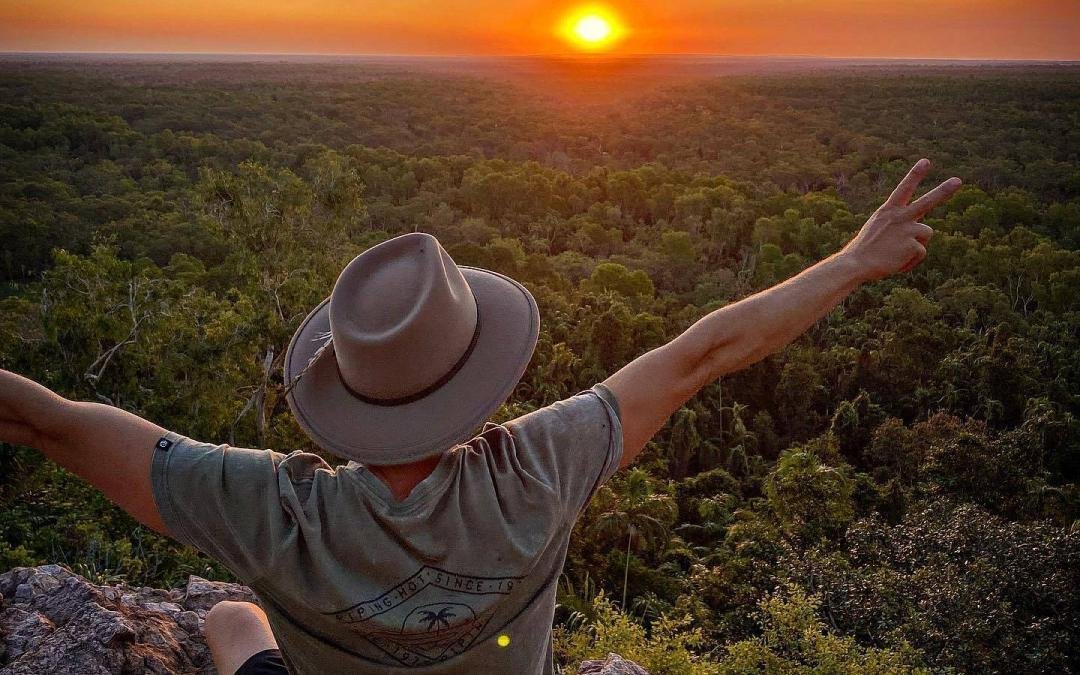
Kakadu is one of the most photogenic places in Australia, but it is also huge, hot and very seasonal. The difference between an average photo and a great one usually comes down to three things: being in the right spot, at the right time of day, in the right season. As local guides who spend our working lives on these roads and tracks, here are the places we take photographers in Kakadu and the wider Top End, and how to get the most out of each one.
If you would rather have a local do the planning, see our private photography tours, which are built around the light, the wildlife and your shot list.
The best places to photograph in Kakadu National Park

1. Ubirr: rock art and the classic Kakadu sunset
If you only shoot one sunset in Kakadu, make it Ubirr. A short, steep climb takes you to the top of the rock, with views across the Nadab floodplain that change colour as the sun drops. On the way up you pass some of the best-known rock art galleries in the park. It is a popular spot at sunset, so arrive early to find your position and set up before the crowd. A wide lens for the floodplain and a mid-range zoom for the light on the escarpment will cover most shots.
2. Yellow Water: birdlife and crocodiles at sunrise
The Yellow Water wetlands near Cooinda are the place for wildlife photography. A sunrise cruise gives you soft light, mist on the water in the early Dry season, and birds at their most active: jabiru, egrets, jacanas walking across the lily pads, sea eagles and kingfishers. Saltwater crocodiles are almost guaranteed. Bring your longest lens, set a fast shutter speed for birds in flight, and remember the boat is moving, so stabilisation helps.
3. Cahills Crossing: crocodiles on the move
On the East Alligator River, the causeway into Arnhem Land is famous for crocodiles gathering to feed as the tide pushes fish over the crossing. Check the tide times before you go. Shoot from the viewing platform, never from the water’s edge: these are large, wild saltwater crocodiles, and the crossing is dangerous.
4. Burrungkuy (Nourlangie) and Nawurlandja Lookout
Burrungkuy has some of Kakadu’s most striking rock art, including paintings of ancestral beings, sheltered under a huge sandstone outcrop. Across the valley, the short walk up to Nawurlandja Lookout gives you the whole escarpment glowing orange in the late afternoon, which makes it a quieter alternative to Ubirr for sunset.
5. Mamukala Wetlands: the bird hide
Late in the Dry season, Mamukala can fill with magpie geese and other waterbirds. The bird hide lets you sit still and wait, which is often how the best wildlife shots happen. Come early or late in the day.
6. Jim Jim and Twin Falls: escarpment country
These waterfalls drop off the Arnhem Land escarpment in some of the most dramatic country in the park. They are only reachable by 4WD in the Dry season, and the road usually opens partway through the year, depending on conditions. Jim Jim often slows to a trickle late in the Dry, while in the Wet the falls roar but the road is closed. The best way to photograph them in full flow is a scenic flight.
7. Gunlom: the view from the top pools
In the south of the park, a steep climb from the Gunlom plunge pool takes you to the natural infinity pools at the top, with views across southern Kakadu. It is a great spot for wide landscapes in the late afternoon.
Beyond Kakadu: more Top End photography locations

- Litchfield National Park: Florence, Wangi and Tolmer Falls, the Buley Rockholes, and the magnetic termite mounds, which look best in low morning or evening light. It is about an hour and a half from Darwin, so it works well as a day trip.
- Nitmiluk (Katherine Gorge): sunrise from the lookouts above the gorge, and the sandstone walls from the water on a cruise. Leliyn (Edith Falls) is on the way back to Darwin.
- Fogg Dam and the Mary River wetlands: close to Darwin and excellent for waterbirds, especially early in the morning.
- Adelaide River: a jumping crocodile cruise gives you crocodiles launching out of the water at very close range. Use a fast shutter speed.
- Darwin: sunset over the harbour from Mindil Beach, with the Mindil Beach Sunset Market running on Thursday and Sunday evenings in the Dry season.
- Arnhem Land: remote rock art galleries and wide floodplains across the East Alligator River. You need a permit to visit, which we arrange for our guests.
When is the best time to photograph Kakadu?
The Bininj people of Kakadu recognise six seasons, but for photographers the year breaks into three very different trips:
- The Dry (about May to September): wildlife crowds the shrinking billabongs, birdlife peaks, skies are clear for the Milky Way, and almost every road is open. It is also the busiest time, so book early.
- The Build-up (about October to December): hot and humid, with spectacular storm clouds, lightning over the escarpment and fiery sunsets.
- The Wet (about January to April): green country, roaring waterfalls and huge skies. Some roads and sites close, so a scenic flight is the best way to capture the big falls.
Practical tips for photographing the Top End
- Shoot the edges of the day. The midday light is harsh and the heat is real. Plan for sunrise and late afternoon, and rest in between.
- Watch for condensation. Moving from an air-conditioned car into tropical humidity will fog your lens. Take your camera out a few minutes early to let it warm up.
- Protect your gear from dust. Dirt roads are dusty in the Dry. Carry a blower and a lens cloth, and change lenses inside the vehicle.
- Keep well back from the water. Saltwater crocodiles live in rivers, billabongs and estuaries throughout the Top End. Follow the signs and never stand at the water’s edge for a shot.
- Respect cultural sites. Some places and some ceremonies must not be photographed, and signs will tell you. Always ask before photographing people.
- Leave the drone at home. Recreational drones are not allowed in Kakadu. For aerial photos, book a scenic flight.
- Selling your photos? Holiday snaps are fine, but commercial photography in Kakadu needs a permit. Read our guide to filming and photography permits in Kakadu and the NT.
Photograph the Top End with a local guide
Group tours keep moving, but wildlife and good light don’t run to a timetable. On our private photography tours it is just you and your group, with Scotty or Becs as your guide and a 4WD with room for tripods and long lenses. We plan each day around sunrise and sunset, take you to the spots above at the right time, and stay as long as you need for the shot. Special requests are always welcome.